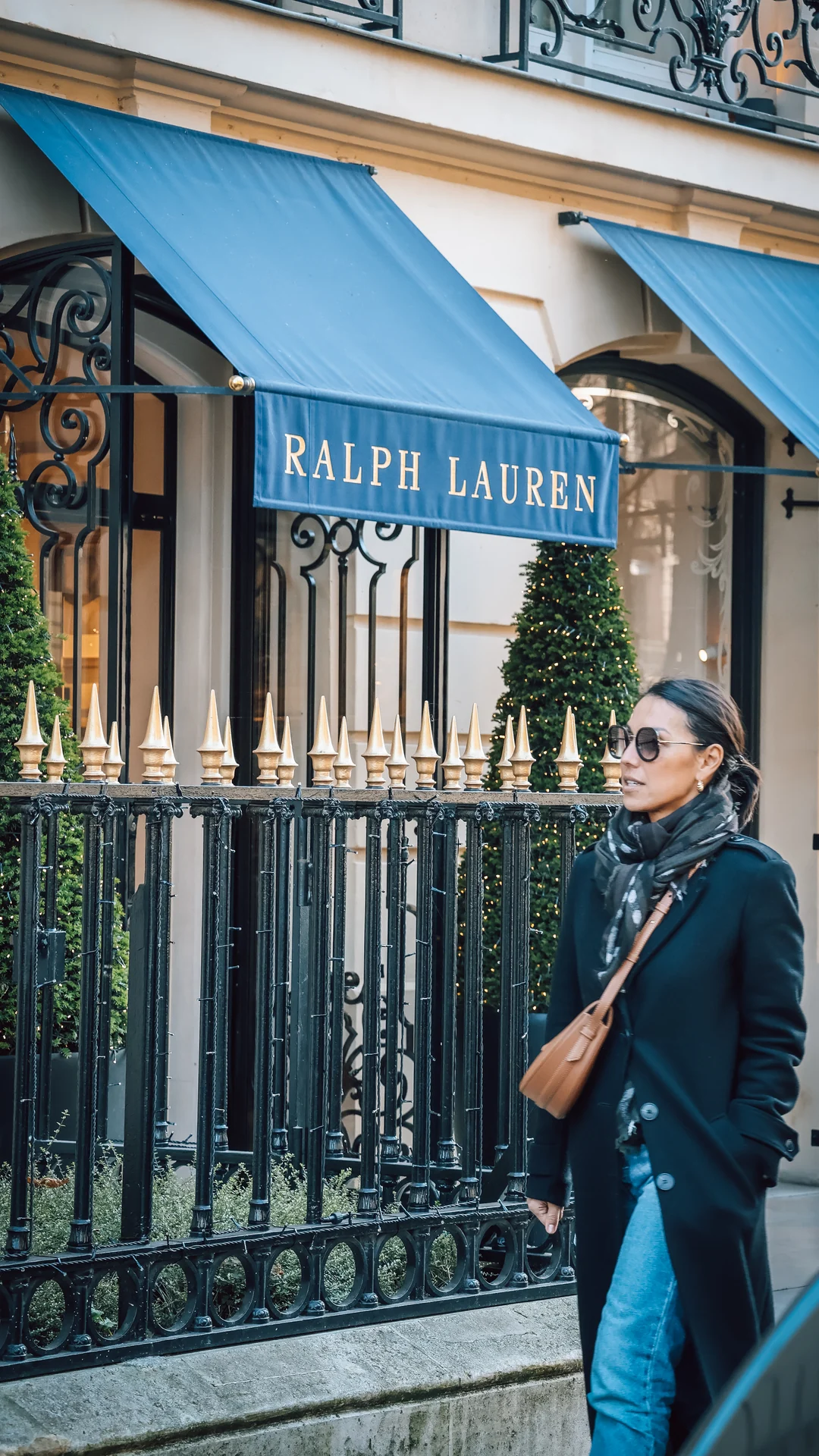
Woman walking in front of the gold gates and blue Ralph Lauren awning on Avenue MontaigneElegant woman walking in front of the Ralph Lauren boutique on Avenue Montaigne in Paris
< Retour

Avenue Montaigne, the high-fashion mecca

Elegant passerby in front of the Ralph Lauren boutique and its blue awnings, Avenue Montaigne

While Avenue Montaigne is a must-visit today for anyone looking to admire the latest inspirations from the greatest couturiers, that was not always the case.

In the 17th century, this Parisian thoroughfare was known as the "Allée des Veuves" (Widows' Alley), a rustic path frequented by nuns from the Convent of the Visitation-Sainte-Marie and grieving women who came there for quiet reflection. It was not until 1850 that it was renamed in honor of Renaissance philosopher Michel de Montaigne.

The first transformations began in the early 19th century with the arrival of fashionable spots like the Bal Mabille, the birthplace of the French Cancan, which attracted the Parisian elite. However, it was after the Second World War that the avenue became the beating heart of fashion and luxury. In 1946, Christian Dior moved in, and in 1947, he launched his "New Look" there, revolutionizing haute couture. Soon, the greatest fashion houses (Chanel, Louis Vuitton, Valentino, Prada, Gucci) established themselves there, turning its storefronts into a global symbol of elegance and refinement.

Today, Avenue Montaigne embodies the Parisian "Golden Triangle," a space where prestigious hotels, art galleries, jewelry stores, and Michelin-starred restaurants mingle. Each address offers a unique experience, combining architecture, scenography, and exceptional service in a tradition of excellence that defines Paris.
Vous aimerez aussi

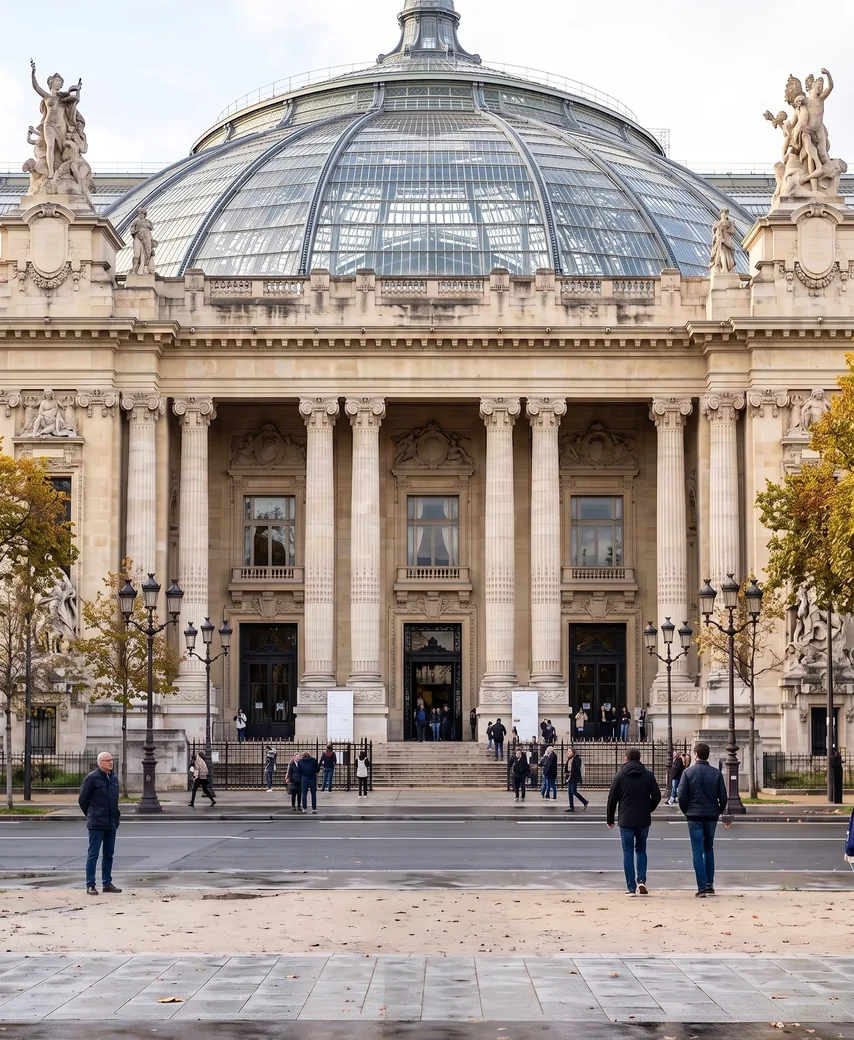
Facade of the Grand Palais in Paris with a large domed glass roof, imposing columns, and decorative sculptures, with people walking and standing in front of the entrance.

The Grand Palais for the world's elite

Designed by architects Henri Deglane, Albert Louvet, and Albert Thomas, this eclectic monument blends neoclassicism, Art Nouveau, and modernity—a distillation of French Belle Époque influences.

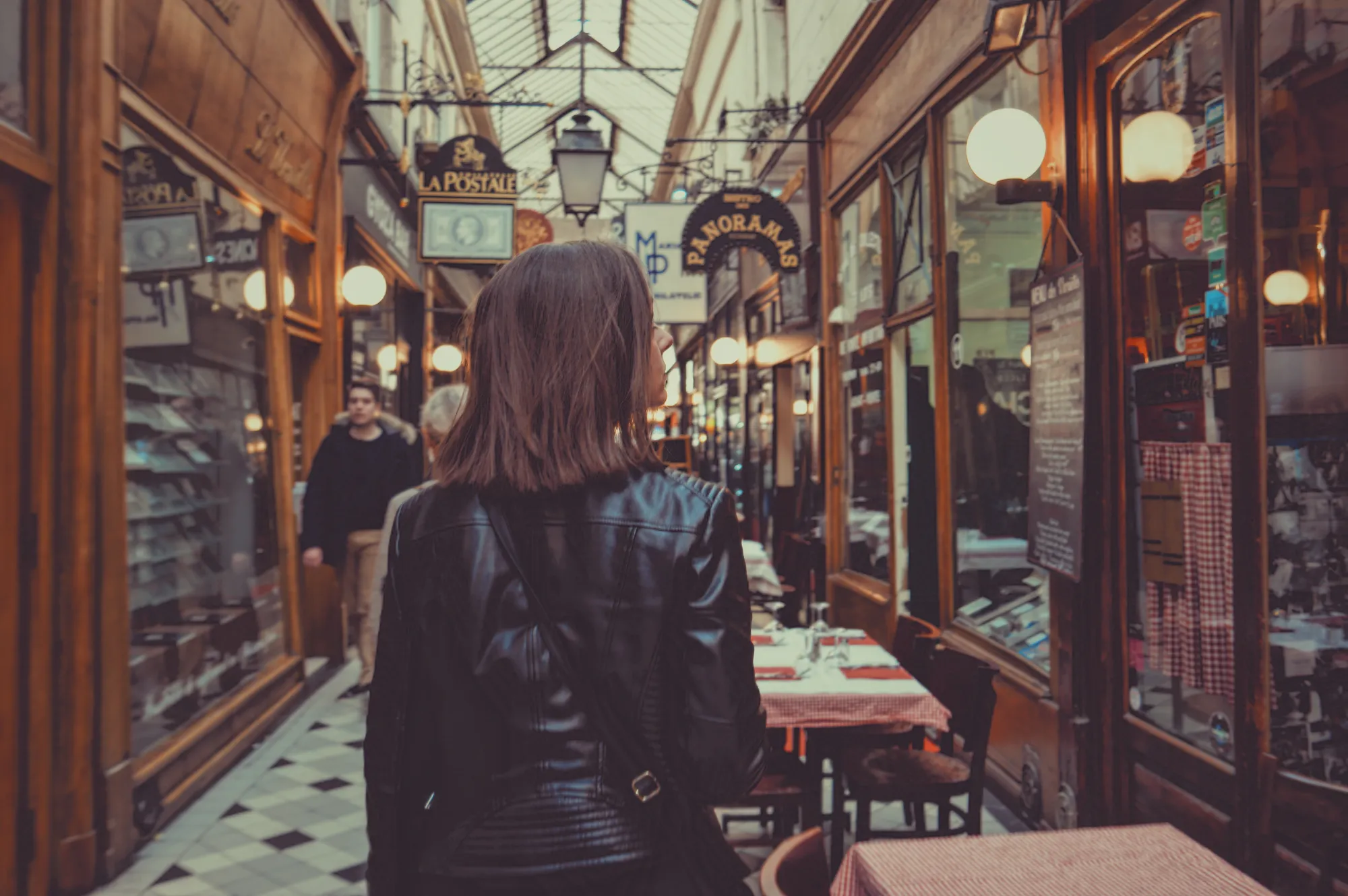
A woman seen from behind wearing a black leather jacket, walking in a covered gallery with shops and restaurant tables with red checkered tablecloths.

Paris and its secret passages

Venture into 19th-century Paris, where light dances through glass roofs and every step echoes on flagstones laid over 200 years ago. The covered passages, the capital's hidden gems, are marvels of glass and iron born from the architectural audacity of an era in the midst of the Industrial Revolution.

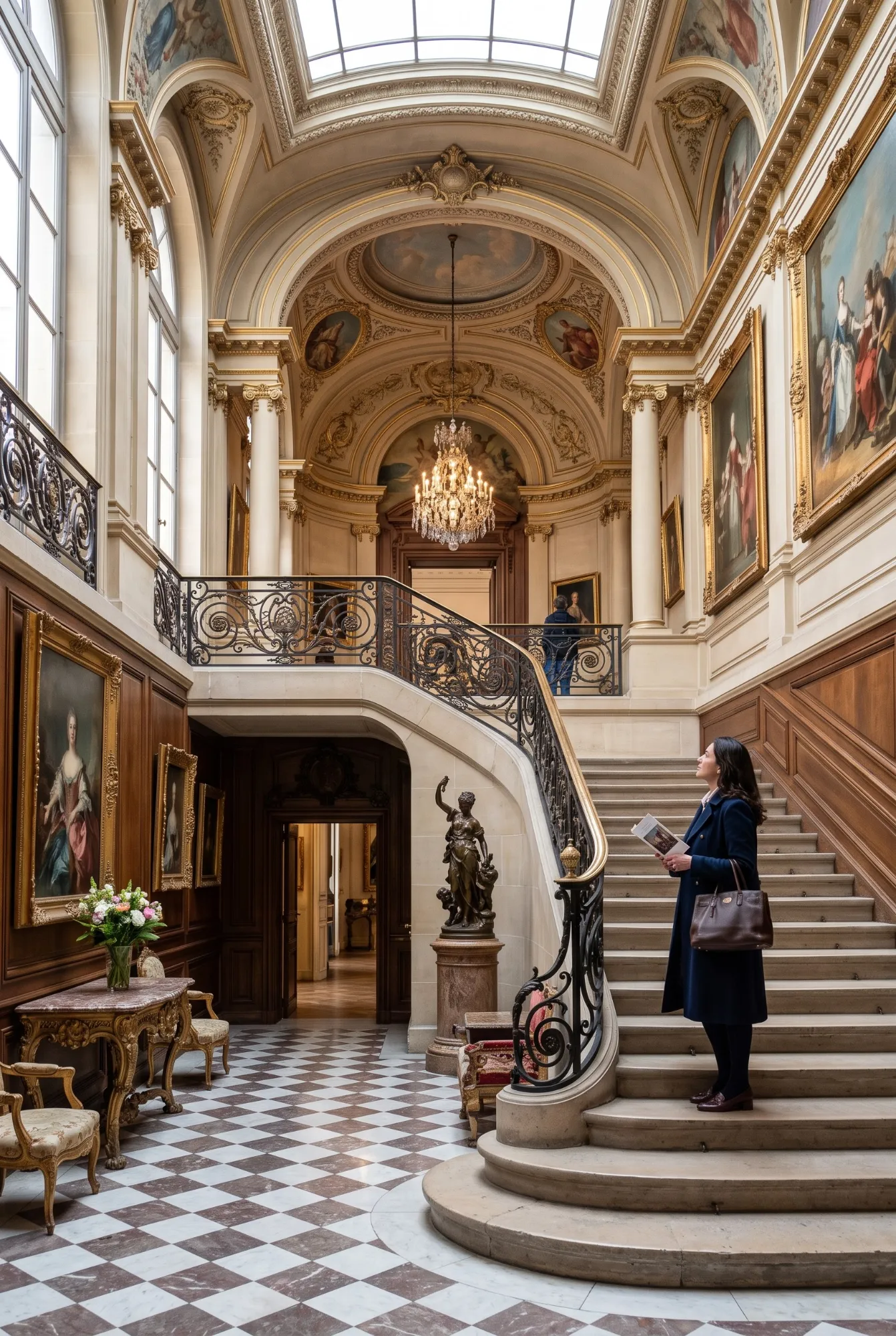
Luxurious interior with a grand stone staircase featuring a wrought-iron railing, a vaulted ceiling adorned with frescoes, a hanging crystal chandelier, walls decorated with framed portraits, a checkered marble floor, and a woman in a dark coat holding a guidebook while observing the artwork.

The Jacquemart-André Museum, an artistic love story

Nélie Jacquemart and Édouard André were one of the most iconic couples in 19th-century Parisian artistic and social life. Édouard André (1833–1894), heir to a family fortune, was a banker and a passionate art collector.