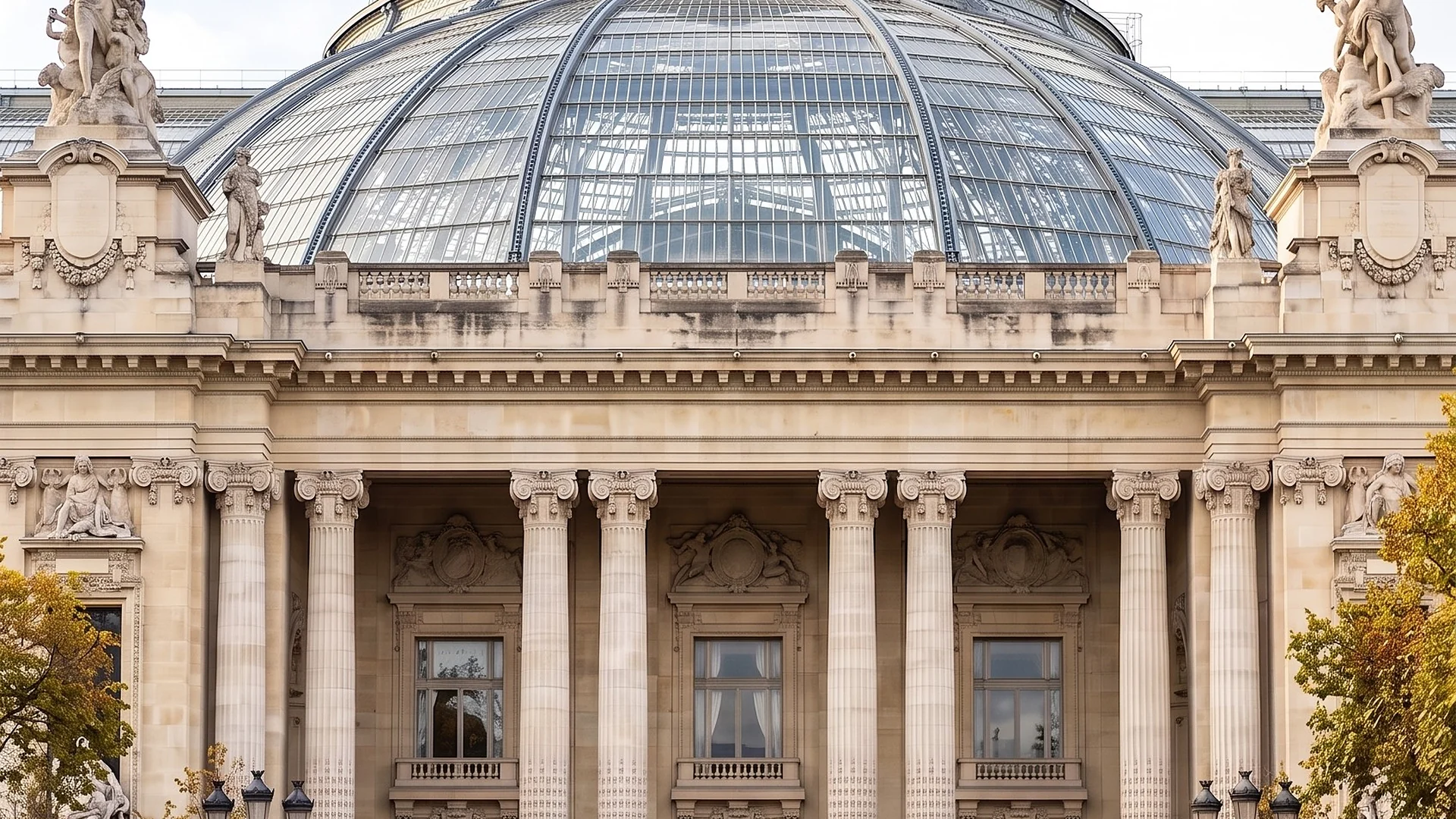
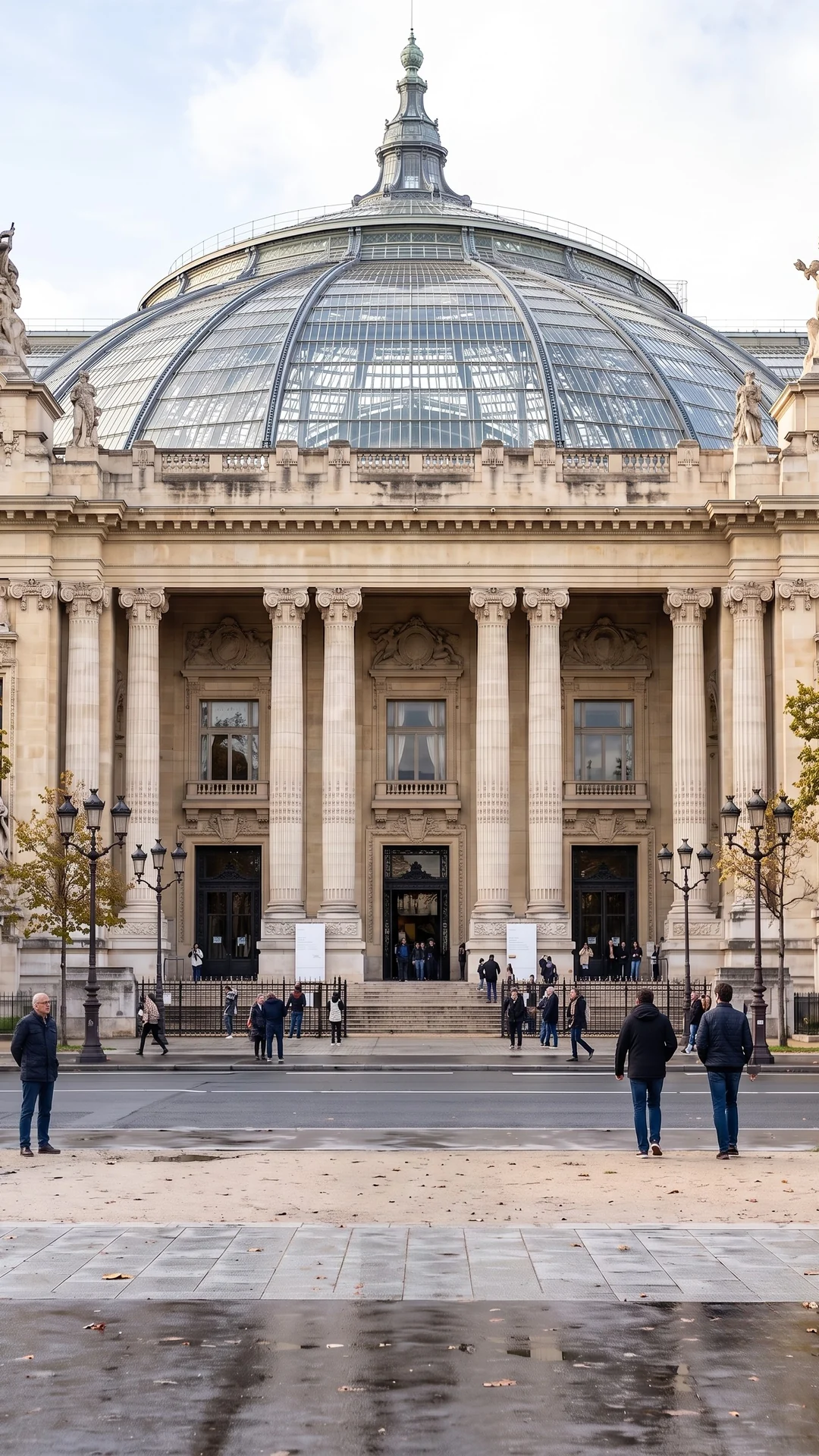
Facade of the Grand Palais in Paris with its colonnade, sculptures, and glass roofEntrance to the Grand Palais topped by its glass dome, visitors on the forecourt
< Retour

The Grand Palais for the world's elite

Monumental glass roof and colonnade of the Grand Palais in the 8th arrondissement of Paris

Like its illustrious neighbor, the Eiffel Tower, the Grand Palais was born for a World's Fair—in this case, the 1900 Exposition Universelle. Designed by architects Henri Deglane, Albert Louvet, and Albert Thomas, this eclectic monument blends neoclassicism, Art Nouveau, and modernity—a distillation of French Belle Époque influences. Its glass roof, one of the largest in Europe, provided the bright natural light necessary at the time to appreciate the artworks and scientific projects on display.

Initially intended to host temporary exhibitions and cultural events, the Grand Palais became, over the decades, a cornerstone of Parisian artistic life. It began hosting salons, fashion shows, and major retrospectives. Between 1914 and 1918, it was requisitioned as a military hospital, before returning to its cultural vocation at the end of the war.

Today, the recently restored Grand Palais continues to shine with world-class temporary exhibitions, just a few hundred meters from your room at the Mathis.
Vous aimerez aussi

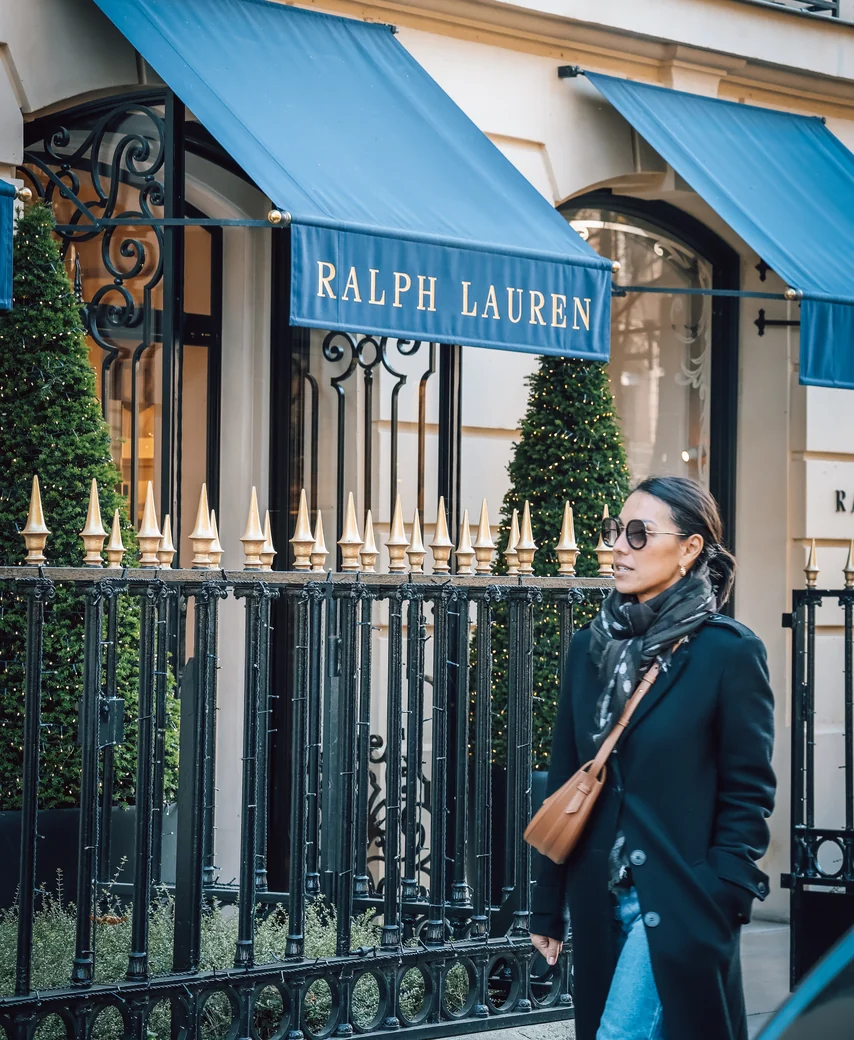
A woman wearing a black coat, a scarf, and sunglasses walks in front of a Ralph Lauren boutique with blue awnings and an ornamental black gate.

Avenue Montaigne, the high-fashion mecca

While Avenue Montaigne is a must-visit today for anyone looking to admire the latest inspirations from the greatest couturiers, that was not always the case.

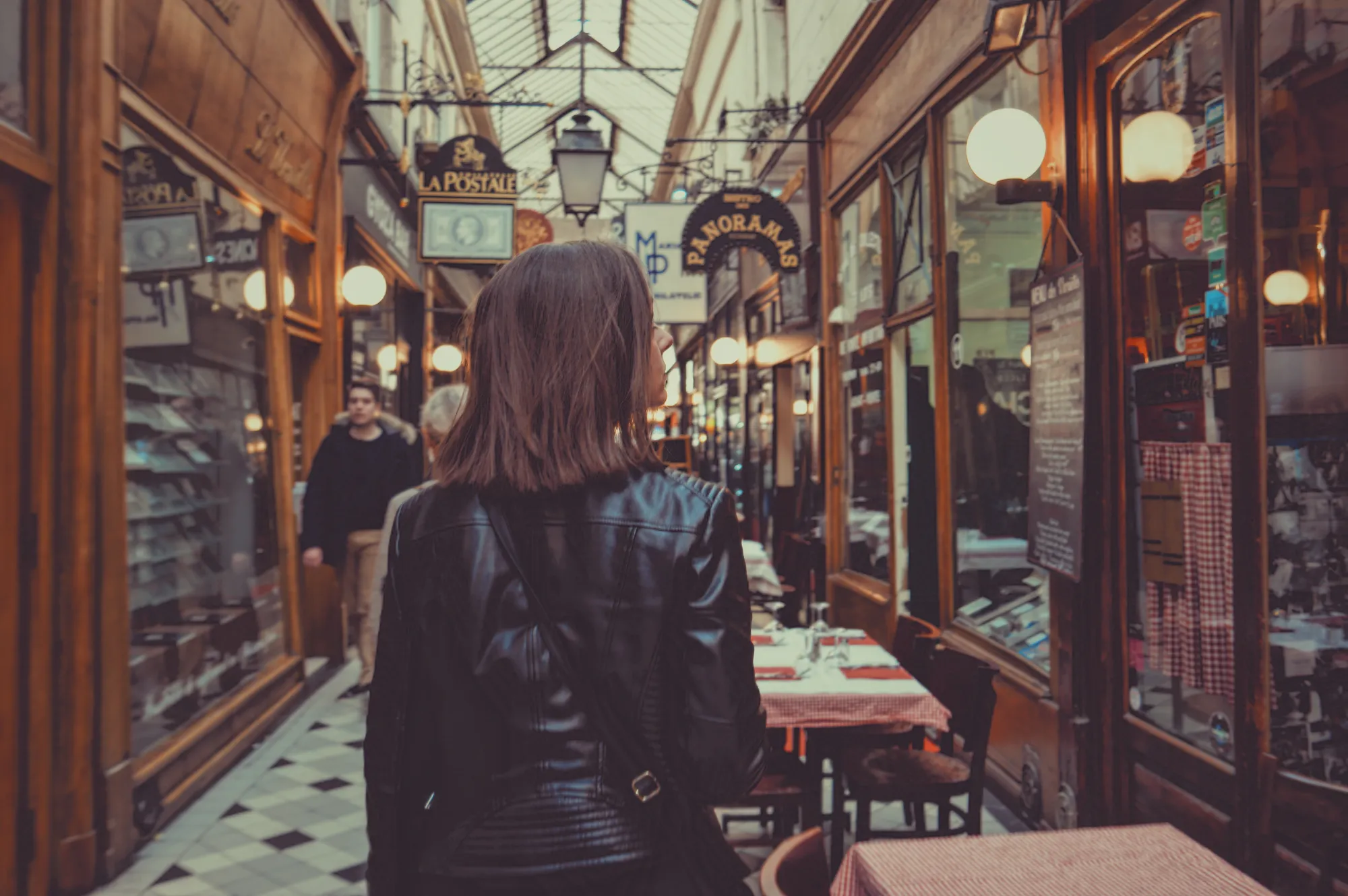
A woman seen from behind wearing a black leather jacket, walking in a covered gallery with shops and restaurant tables with red checkered tablecloths.

Paris and its secret passages

Venture into 19th-century Paris, where light dances through glass roofs and every step echoes on flagstones laid over 200 years ago. The covered passages, the capital's hidden gems, are marvels of glass and iron born from the architectural audacity of an era in the midst of the Industrial Revolution.

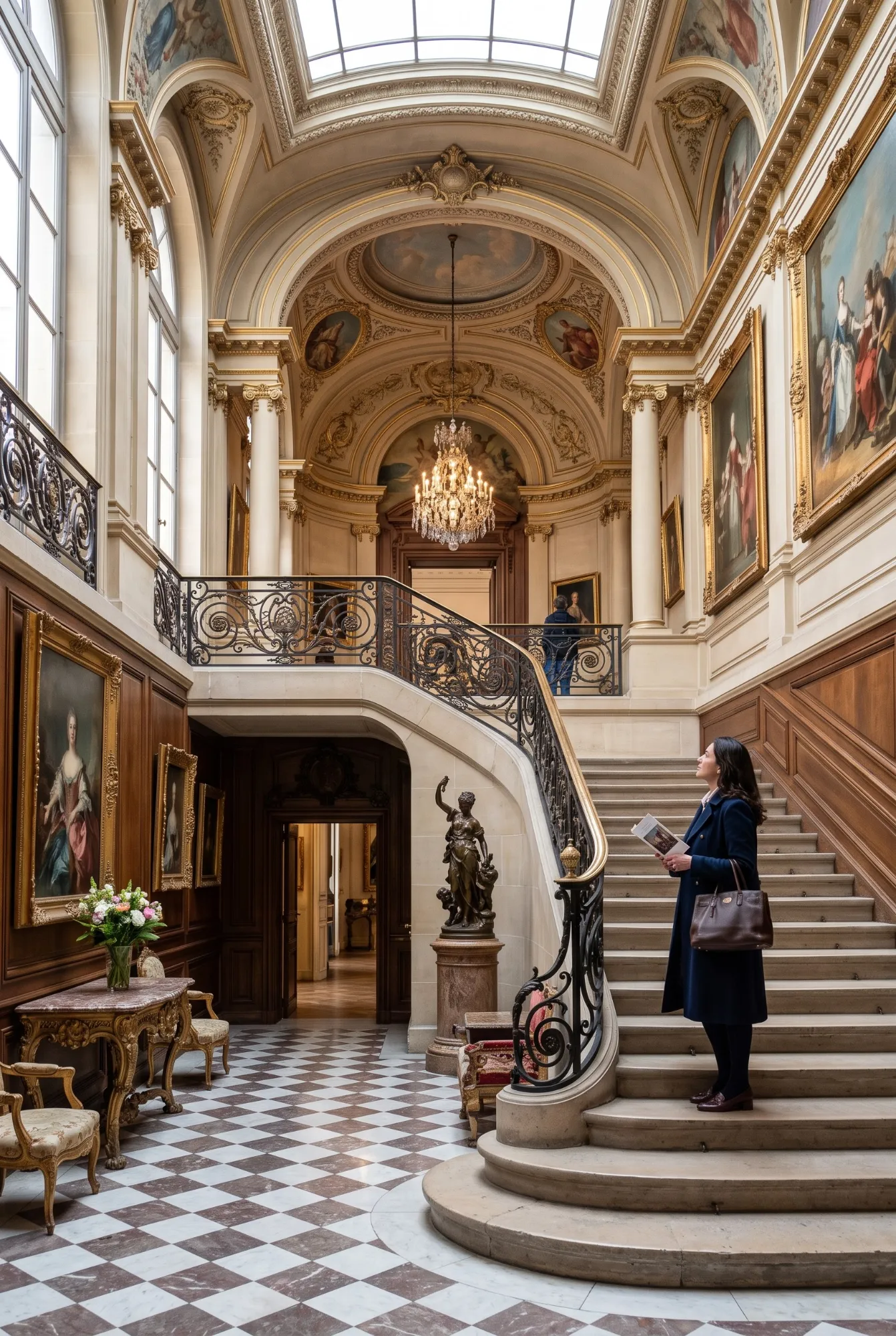
Luxurious interior with a grand stone staircase featuring a wrought-iron railing, a vaulted ceiling adorned with frescoes, a hanging crystal chandelier, walls decorated with framed portraits, a checkered marble floor, and a woman in a dark coat holding a guidebook while observing the artwork.

The Jacquemart-André Museum, an artistic love story

Nélie Jacquemart and Édouard André were one of the most iconic couples in 19th-century Parisian artistic and social life. Édouard André (1833–1894), heir to a family fortune, was a banker and a passionate art collector.