Luxurious museum interior with a grand stone staircase featuring a wrought-iron railing, a vaulted ceiling adorned with paintings, and a large crystal chandelier. A woman in a blue coat looks at a painting while holding a guidebook, surrounded by framed portraits on the wall, antique furniture, and a statue at the foot of the stairs.Museum interior with a grand curved stone staircase, walls adorned with framed portraits, a white and brown checkered floor, a crystal chandelier hanging from a vaulted ceiling decorated with frescoes, and a woman in a blue coat holding a guidebook standing on the steps.
< Retour

The Jacquemart-André Museum, an artistic love story
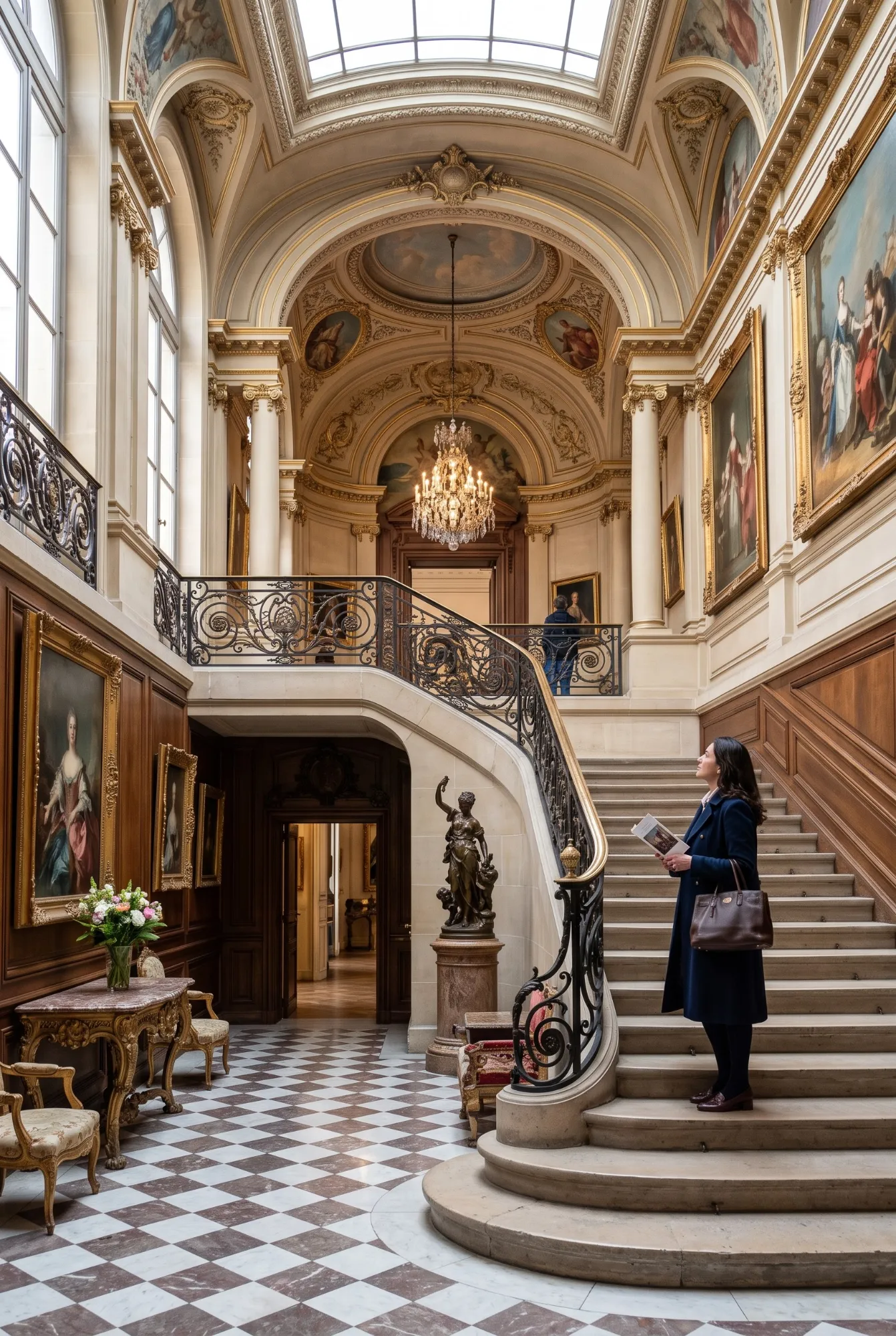
Interior of an elegant museum with a grand stone staircase, framed paintings adorning the walls, a vaulted ceiling decorated with frescoes, a hanging crystal chandelier, and a statue on a pedestal at the foot of the stairs where a woman looks at the works while holding a guidebook.

Nélie Jacquemart and Édouard André were one of the most iconic couples in 19th-century Parisian artistic and social life. Édouard André (1833–1894), heir to a family fortune, was a banker and a passionate art collector. Nélie Jacquemart (1841–1912), meanwhile, was a talented portrait painter and student of Léon Cogniet, who gained recognition for her works exhibited at the Paris Salon.

In 1869, Édouard André commissioned architect Henri Parent to build a sumptuous private mansion—now the Jacquemart-André Museum—to house his growing art collection. He met Nélie Jacquemart in 1872 and married her in 1881. After their marriage, they traveled across Europe together, acquiring masterpieces of the Italian Renaissance, Flemish paintings, and objets d'art, transforming their home into a true private museum.

Following Édouard's death in 1894, Nélie continued their shared mission, further enriching the collection. In 1912, she bequeathed the mansion and its treasures to the Institut de France, gifting Paris a unique museum, which you can reach from the Mathis in just an 11-minute walk.
Vous aimerez aussi

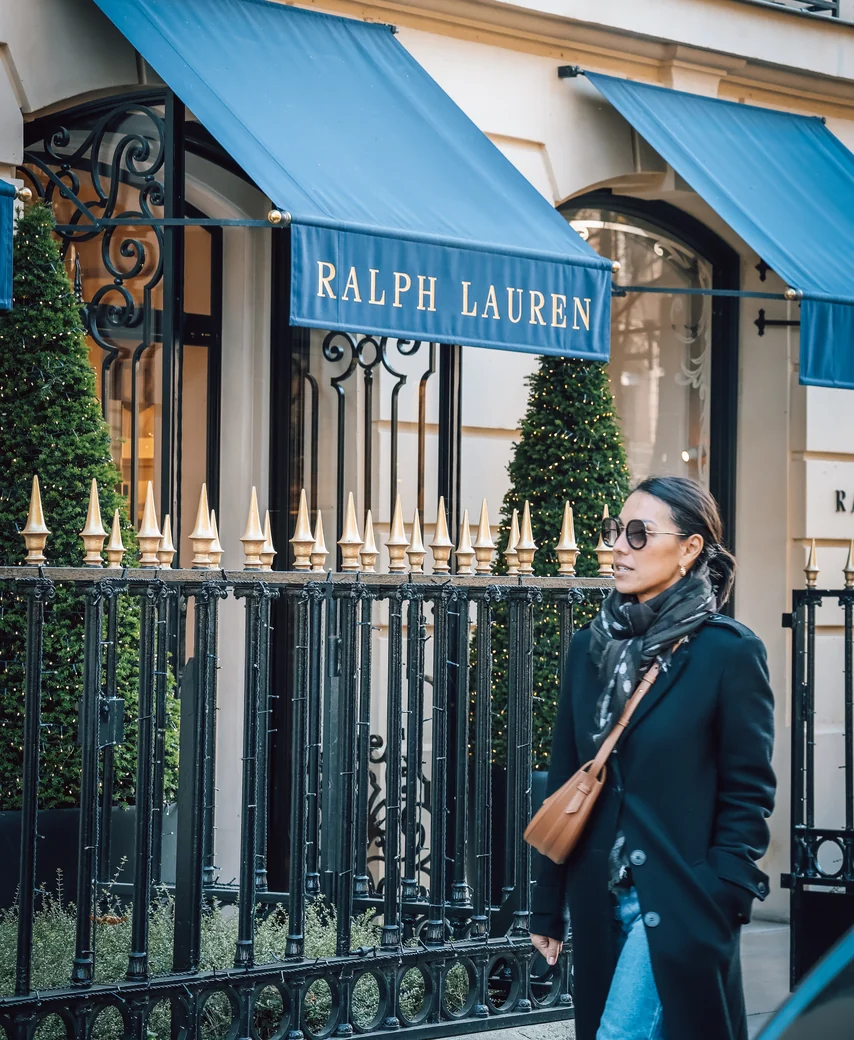
A woman wearing a black coat, a scarf, and sunglasses walks in front of a Ralph Lauren boutique with blue awnings and an ornamental black gate.

Avenue Montaigne, the high-fashion mecca

While Avenue Montaigne is a must-visit today for anyone looking to admire the latest inspirations from the greatest couturiers, that was not always the case.

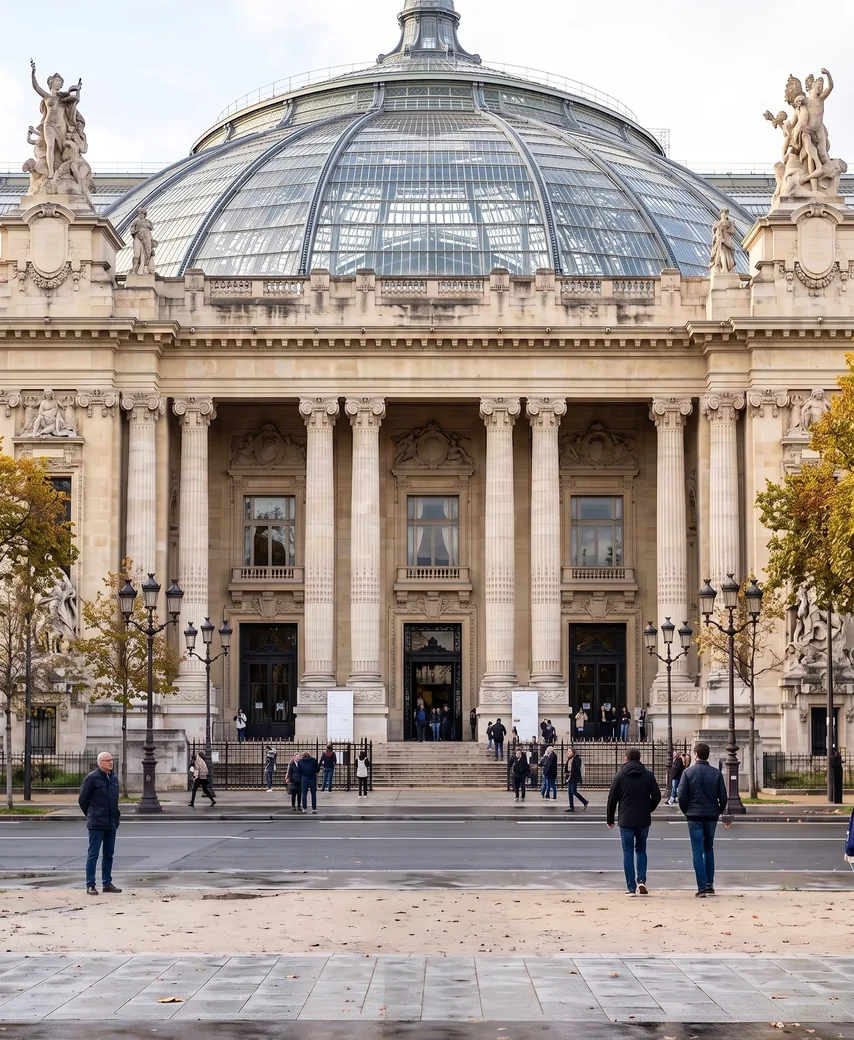
Facade of the Grand Palais in Paris with a large domed glass roof, imposing columns, and decorative sculptures, with people walking and standing in front of the entrance.

The Grand Palais for the world's elite

Designed by architects Henri Deglane, Albert Louvet, and Albert Thomas, this eclectic monument blends neoclassicism, Art Nouveau, and modernity—a distillation of French Belle Époque influences.

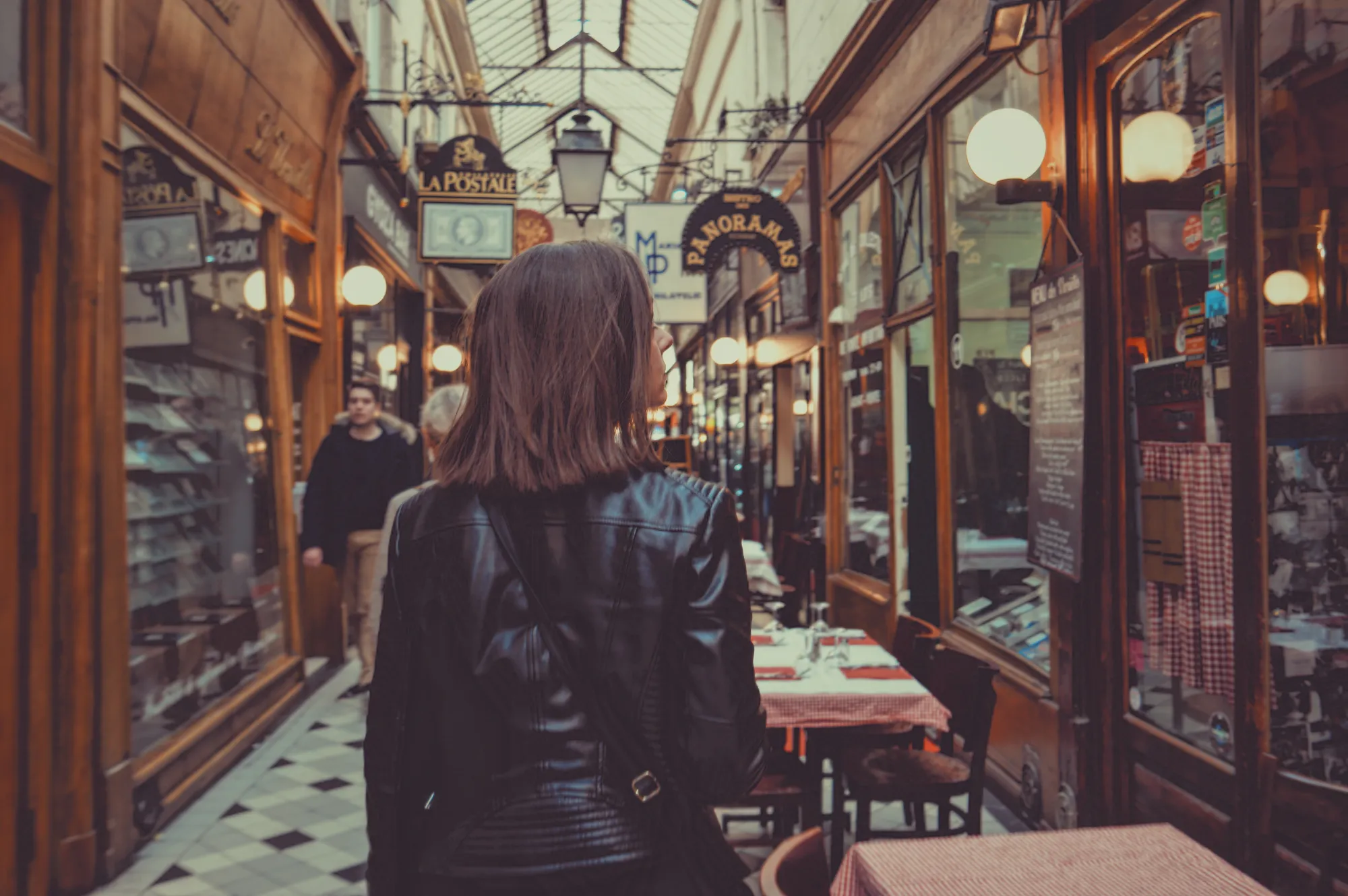
A woman seen from behind wearing a black leather jacket, walking in a covered gallery with shops and restaurant tables with red checkered tablecloths.

Paris and its secret passages

Venture into 19th-century Paris, where light dances through glass roofs and every step echoes on flagstones laid over 200 years ago. The covered passages, the capital's hidden gems, are marvels of glass and iron born from the architectural audacity of an era in the midst of the Industrial Revolution.